
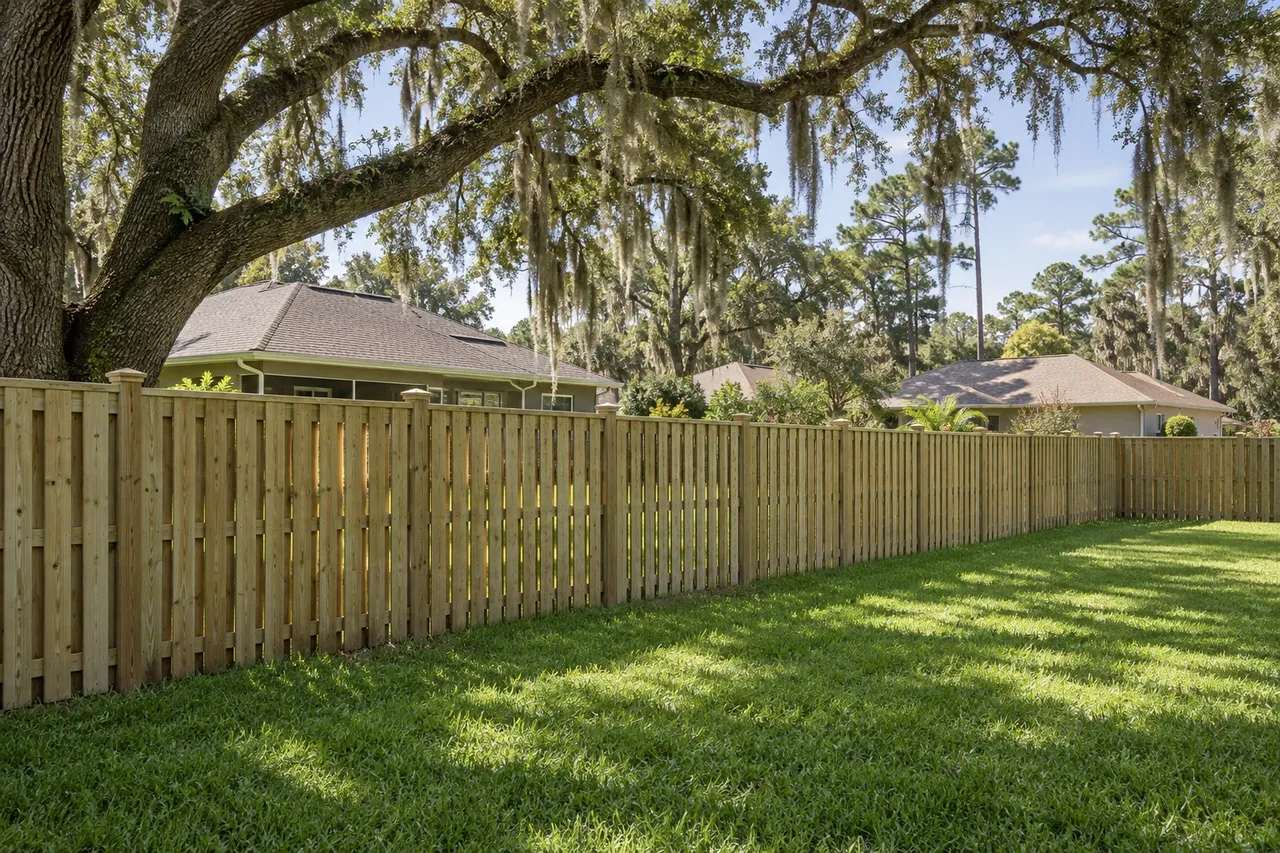
Wood Fence Installation in Ocala, FL
A wood fence is still the lowest-cost route to full privacy, and nothing else looks quite like it behind an older Ocala home. We build treated pine and cedar fences on posts made to sit in Florida soil.
- Free on-site estimates
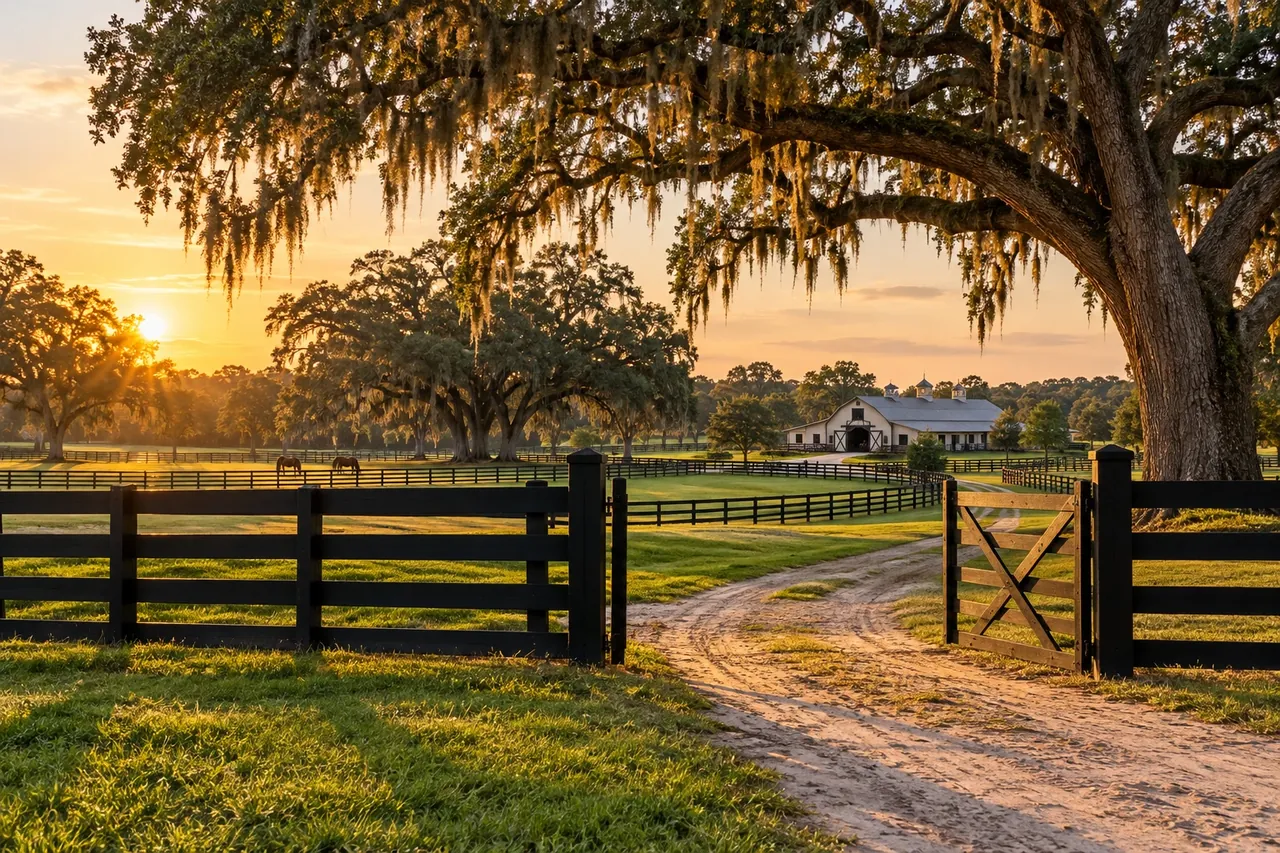
- Backyards, pools, pastures & paddocks
- We sort out permits and HOA paperwork
- Free on-site estimates
- Permits & HOA paperwork handled
- Residential, farm & horse fencing
- Old fence haul-away & cleanup
Is Wood Right for Your Property?
Wood makes sense when you want 6 ft of privacy for the least money, when you're fencing a big area, or when a natural look fits the house better than vinyl. It also suits Ocala's older neighborhoods, where many homes have wood siding, porches and mature trees.
The trade-off is upkeep. Our humid summers and daily rain cycles gray and crack untreated wood, and the posts sitting in damp ground are the first thing to fail. A sealed, well-built wood fence commonly lasts a decade or more; a neglected one doesn't.
- Treated pine is the budget choice and the most common.
- Cedar costs more and resists decay and insects naturally.
- Posts are always ground-contact rated treated lumber, set in concrete.
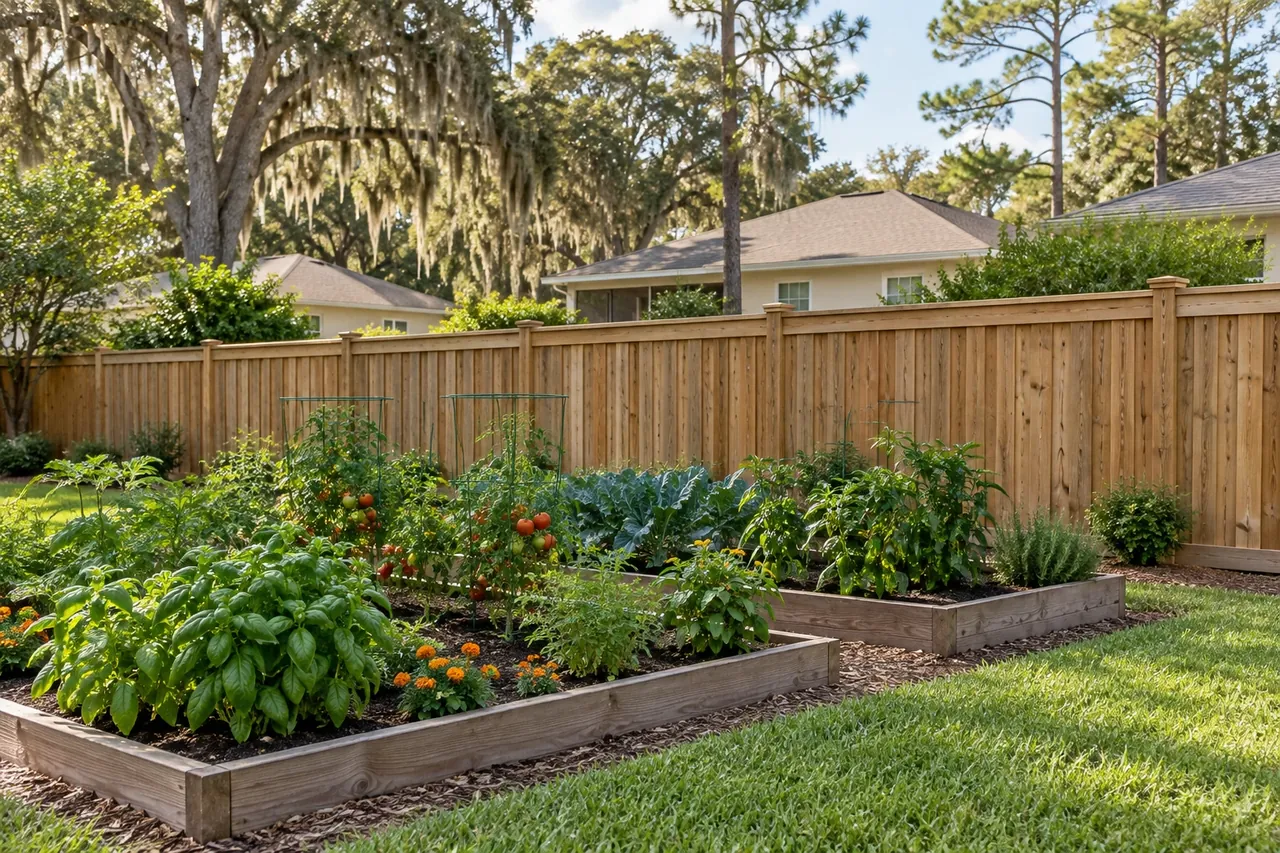
Wood Fence Styles We Build
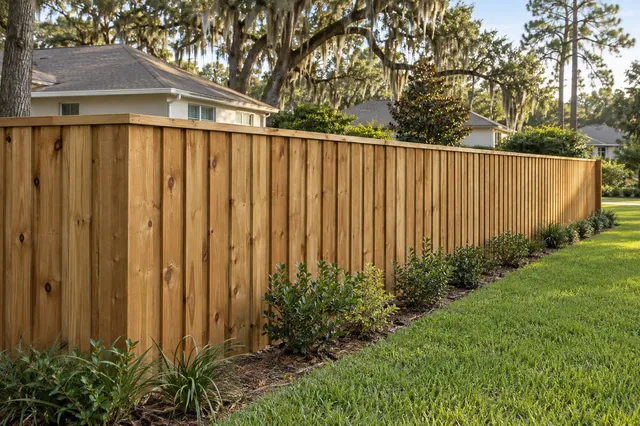
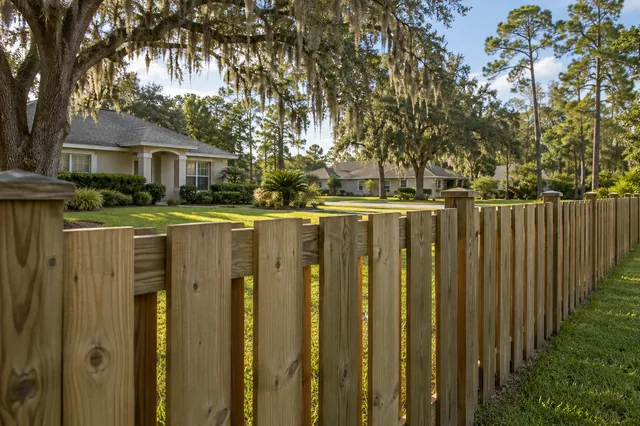
How Much Does a Wood Fence Cost in Ocala?
Wood is usually the least expensive way to get a full privacy fence.
Ranges come from national cost guides and shift with lumber and labor prices. Your free on-site estimate gives you an exact written price. See the Ocala fence cost guide.
Choosing the Right Wood Fence
Style
Board-on-board gives the most privacy. Shadowbox is the friendlier neighbor fence and lets breeze through, which helps on a hot August afternoon. Side-by-side stockade is the cheapest privacy style but opens small gaps as boards dry.
Lumber
Treated pine starts green or tan and weathers silver unless you stain it. Cedar starts warmer and stays straighter. Either way, we fasten with galvanized or stainless hardware so rust doesn't streak the boards.
Caps and trim
A top cap sheds rain off the board ends, which is where rot starts. It's one of the best small upgrades for a wood fence in Florida.
Historic homes
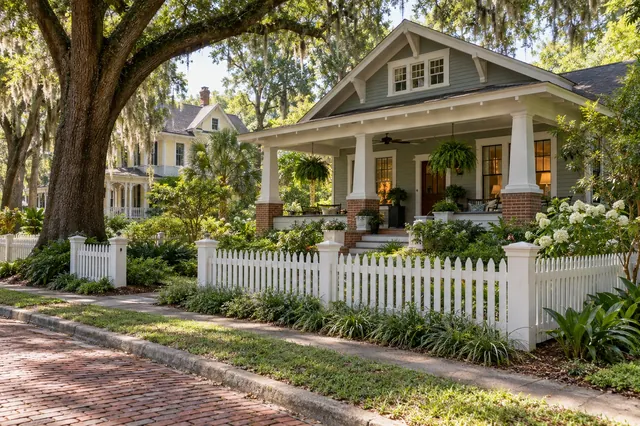
In the Ocala and Tuscawilla Park historic districts, a fence needs a Certificate of Appropriateness. Wood pickets that suit the house tend to be the easiest approval. We help with the drawing.
How We Build a Wood Fence That Lasts
A wood fence is only as good as what's under the ground.
Layout from your survey
We stake the line from your survey and keep it out of drainage swales.
Locates and rock check
Sunshine 811 marks utilities, and we probe for limestone so holes reach full depth.
Posts in concrete
Ground-contact posts go in concrete, crowned on top so water runs away from the wood.
Rails and boards
Rails go on level, boards are spaced evenly and fastened with corrosion-resistant hardware.
Gates and walk-through
Gates get heavy hinges and an anti-sag kit. We walk the fence with you and explain when to seal it.
Making a Wood Fence Last in Marion County
- Let it dry, then seal. New treated lumber is wet. Once water soaks in instead of beading, usually after a few months, apply a sealer or stain. Repeat every two to three years.
- Keep sprinklers off the boards. Daily spray is the fastest way to rot a fence.
- Pull mulch and soil back. Dirt piled against boards invites termites and rot.
- Watch the oaks. Dead limbs over a fence line are the most common cause of wood fence damage we repair here.
Wondering whether vinyl is worth the extra? See the comparison on the homepage or our Ocala fence cost guide. Old wood fence failing? See fence replacement.
Stain Colors and Finishes
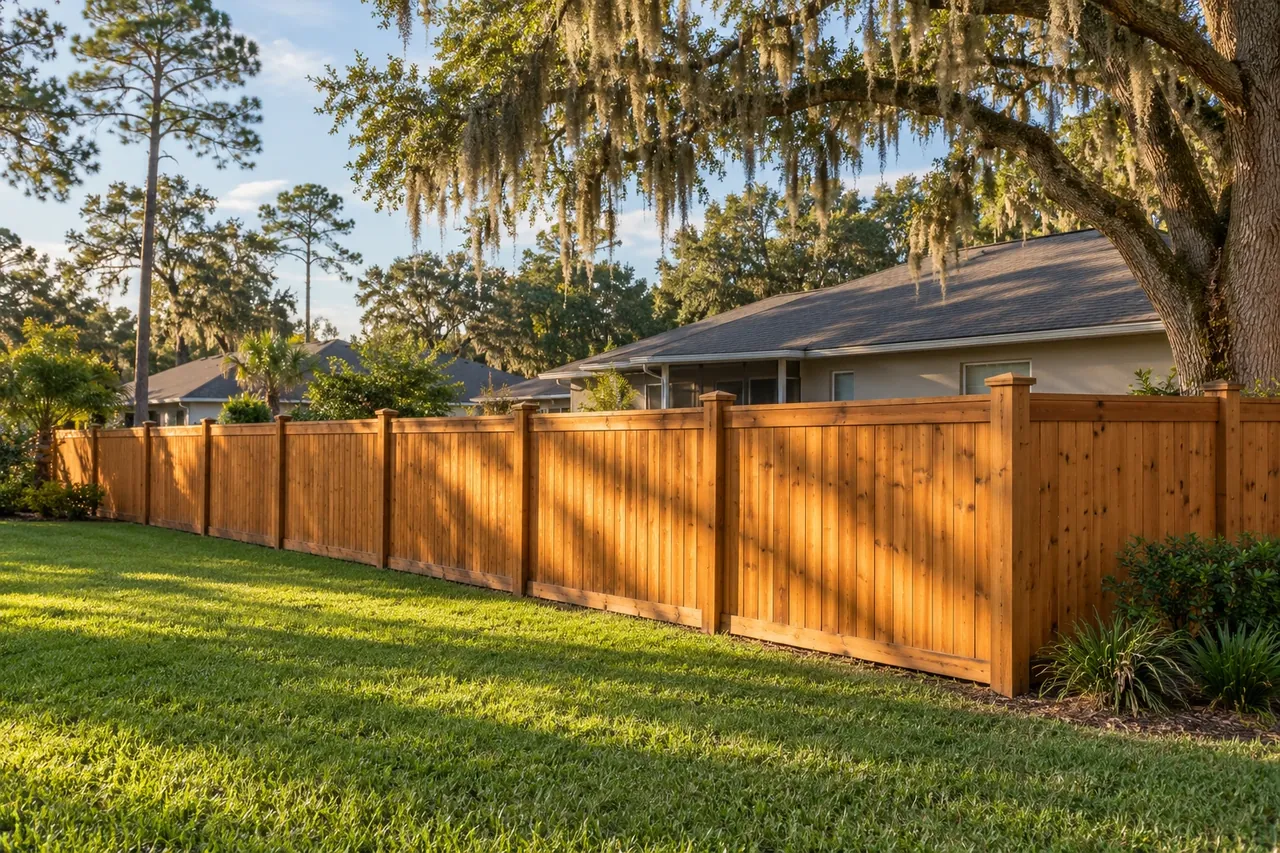
A stain protects the wood and lets you pick the look. Semi-transparent stains show the grain and are easy to refresh. Solid stains hide imperfections and last longer between coats. Darker browns hide mildew better in shady yards; lighter tones stay cooler in full sun.
We can leave the fence raw for you to finish after it dries out, or schedule a return visit to seal it once the lumber is ready.
Frequently Asked Questions
How long does a wood fence last in Ocala?
A treated pine fence that is sealed every few years and kept clear of sprinklers commonly lasts 10 to 15 years. Cedar can last longer. Unsealed fences fail sooner.
Is wood cheaper than vinyl?
Up front, usually yes. Sealing, board replacement and an earlier rebuild narrow the gap over 15 to 20 years.
When can I stain a new fence?
When water sprinkled on the boards soaks in instead of beading, often a few months after install.
Do termites go after wood fences here?
Yes. Ground-contact treated posts help, and so does keeping soil and mulch away from the boards.
Can you build a wood fence in the historic district?
Yes, once the city's Historic Preservation Office issues a Certificate of Appropriateness. We help prepare the application. See the permit guide.
Do I need a permit for a wood fence in Ocala?
Inside city limits, a residential fence 6 ft or under generally doesn't need a building permit outside the historic districts. In unincorporated Marion County we confirm with Building Safety for your job.
Wood Fence Installation Across Marion County
Get Your Free Wood Fence Estimate
Call or request a free on-site estimate for your yard, pool or pasture. No cost, no obligation.
- Free on-site estimates
- Permits & HOA paperwork handled
- Residential, farm & horse fencing
- Old fence haul-away & cleanup